
What Is a Capture The Flag Competition?
Capture The Flag (CTF) competitions are cybersecurity challenges where participants solve security puzzles to find hidden strings called "flags." These events test skills across multiple domains — from cryptography and binary exploitation to web security and forensics. Whether you are a student looking to break into infosec or a seasoned professional sharpening your toolkit, CTFs offer a structured, legal environment to practice real-world attack techniques.
CTFs come in two primary formats: Jeopardy-style and Attack-Defense. In Jeopardy-style CTFs, teams pick challenges from categories and earn points for each flag submitted. Attack-Defense CTFs pit teams against each other — you defend your own services while exploiting vulnerabilities in opponents' infrastructure.
Challenge Categories
Most CTF platforms organize challenges into well-defined categories. Understanding these helps you focus your study and find your niche:
- Web Exploitation — SQL injection, XSS, SSRF, authentication bypasses, and logic flaws in web applications
- Cryptography — Breaking ciphers, RSA attacks, hash collisions, and protocol weaknesses
- Reverse Engineering — Analyzing compiled binaries, understanding assembly, defeating obfuscation
- Binary Exploitation (Pwn) — Buffer overflows, format strings, ROP chains, heap exploitation
- Forensics — Disk images, memory dumps, network captures, steganography
- Miscellaneous — OSINT, programming puzzles, esoteric languages, and anything that does not fit elsewhere
Your First Challenge: A Simple Flag Finder
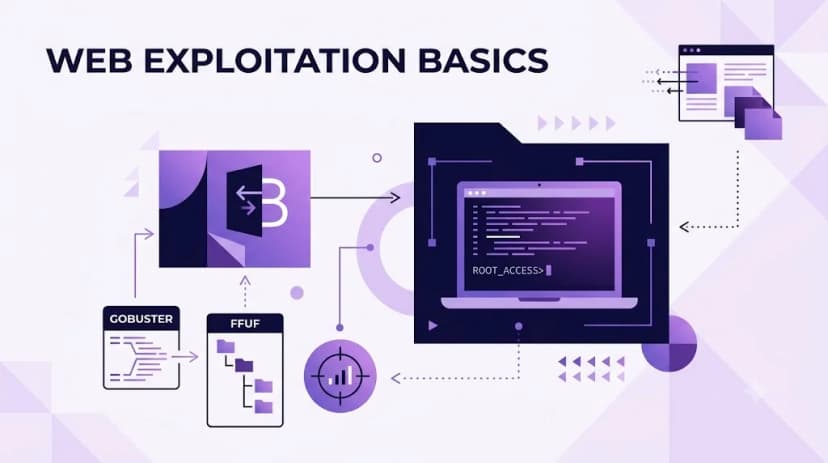
Let's walk through a typical beginner web challenge. You are given a URL and told the flag is hidden somewhere on the page. A common approach is to inspect the page source:
import requests
from bs4 import BeautifulSoup

url = "http://challenge.ctf.bunabyte.com/hidden-flag"
response = requests.get(url)
soup = BeautifulSoup(response.text, "html.parser")

# Flags often hide in HTML comments
comments = soup.find_all(string=lambda text: isinstance(text, Comment))
for comment in comments:
    if "flag{" in comment:
        print(f"Found flag: {comment.strip()}")
This script fetches the page, parses the HTML, and searches for comments containing the flag format. Simple — but it introduces the pattern of methodical enumeration that underpins all CTF solving.
Setting Up Your Environment
Before diving into challenges, prepare a dedicated workspace. A Linux-based environment with common security tools pre-installed saves time during competitions:
- Install Python 3 with
requests,pwntools, andbeautifulsoup4 - Set up a local proxy like Burp Suite or mitmproxy for intercepting web traffic
- Keep CyberChef bookmarked for quick encoding and decoding tasks
- Use a note-taking tool to document solved challenges for future reference
[!WARNING] Never run CTF exploits against systems you do not have explicit permission to test. CTF challenges provide sandboxed environments for a reason. Running exploits against production infrastructure is illegal and unethical, regardless of your intent.
Picking Your First CTF Platform
Several platforms host beginner-friendly challenges year-round. These let you practice at your own pace without the time pressure of a live competition:
- Buna Byte CTF — Our own platform with curated challenges across all categories and dynamic scoring
- PicoCTF — Carnegie Mellon's platform aimed at high school and university students
- OverTheWire — Wargames with progressive difficulty, great for learning Linux and networking
- HackTheBox — Realistic machines and challenges for intermediate to advanced players
Tips for Getting Started
Start with the easiest challenges in a single category. Build confidence before branching out. Read write-ups for challenges you cannot solve — understanding the intended approach teaches more than brute-forcing a solution.
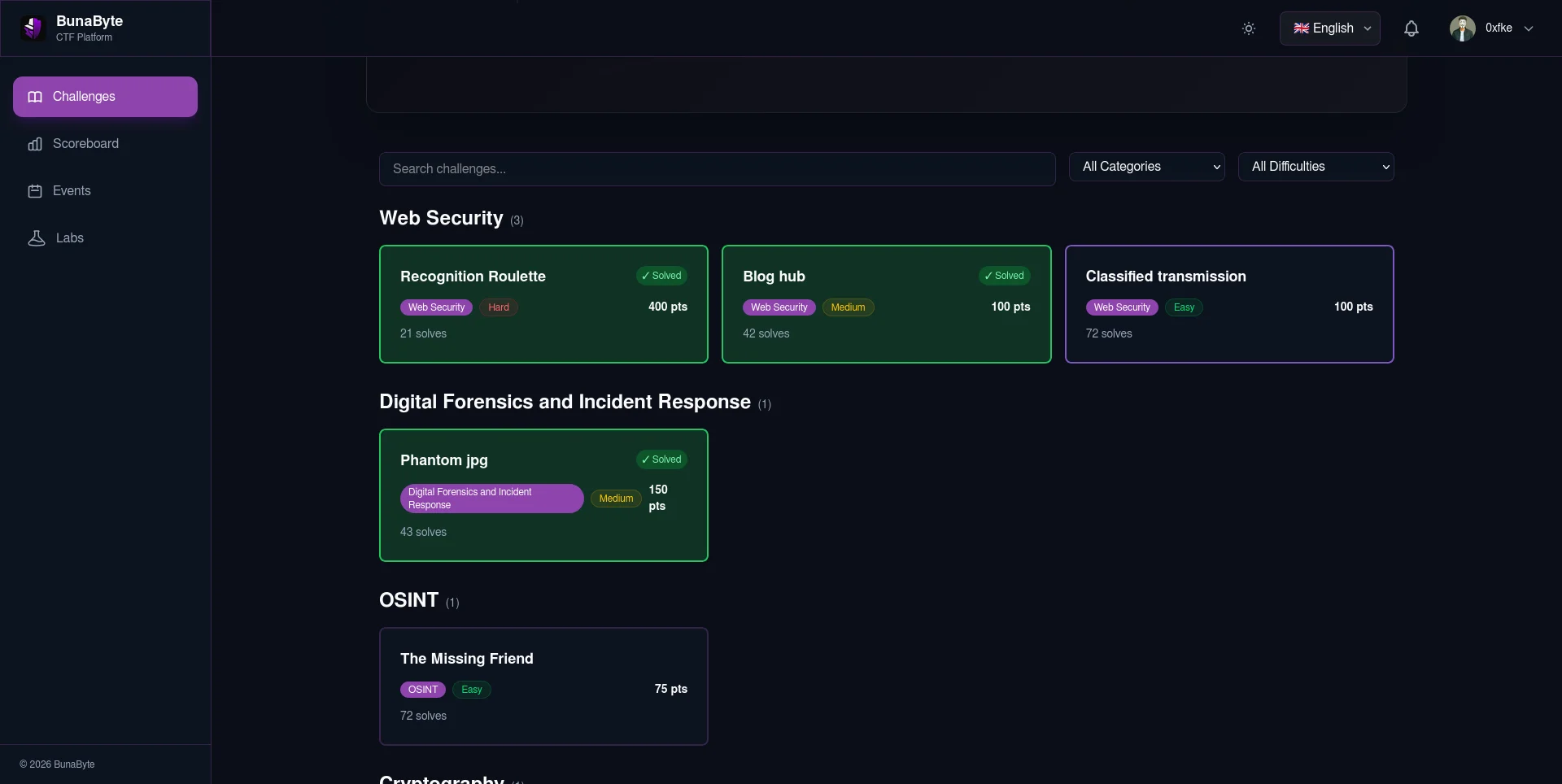 CTF challenge categories overview
Figure 1: Common CTF challenge categories and their relationships to real-world security domains.
Building a Study Plan
Consistency matters more than marathon sessions. Dedicate thirty minutes daily to solving one challenge or reading one write-up. Track your progress across categories to identify weak spots. Join a team or community — discussing approaches with others accelerates learning dramatically.
The cybersecurity field rewards curiosity and persistence. Every challenge you solve adds a tool to your mental toolkit. Start today, pick a platform, and capture your first flag.